
How Oratory Prep Uses MoneyTime to Engage & Inspire Students

When Christopher Sizer, Head of Prep & Head of Innovation at Oratory Prep School in Reading, United Kingdom was looking for a meaningful way to introduce financial literacy to his pupils, he wanted more than worksheets or one‑off lessons. He wanted something that would really engage his students, spark conversation and give them real-world financial knowledge they could carry with them beyond the classroom.
That search led him to MoneyTime.
A Natural Fit for an Innovation Curriculum
At Oratory Prep, every class benefits from a weekly innovation lesson, a dedicated space for forward‑thinking subjects that sit outside the constraints of normal curriculums. As both Head of Prep and Head of Innovation, Christopher has the freedom to shape learning around what he believes truly matters for students’ futures.
Rather than treating financial literacy as a one‑off topic, Christopher embedded MoneyTime into a half‑term block for his Year 7 classes, with weekly sessions lasting an hour.
Onboarding was straightforward. Students created their own accounts and joined the class using a code, a familiar process for pupils already used to modern education platforms.
Over seven weeks, students progressed through MoneyTime’s interactive modules that blend financial concepts, reading, quizzes and game-based decision-making.
Letting Students Take Ownership of Learning
Initially, he unlocked small groups of modules at a time for each lesson and let students explore them independently.
“I would unlock a few modules and then just invite questions throughout,” he says. “So it was much more reaction‑based teaching, rather than saying, ‘Here’s the module, I’m going to teach you this and then you’ll go and do this module.’”
This allowed lessons to be driven by curiosity. When questions surfaced, they became opportunities to explore and connect learning to real life.
“When complex ideas like compound interest arose, we would have discussions and I would use the module guides as a prompt to talk with the class about how it reflects in their own lives,” he says.
As he became more familiar with the structure of the programme, he began shaping lessons more deliberately, verbally introducing the class to key ideas before each module, then letting students explore the module themselves.
Supporting Different Learners in the Same Classroom
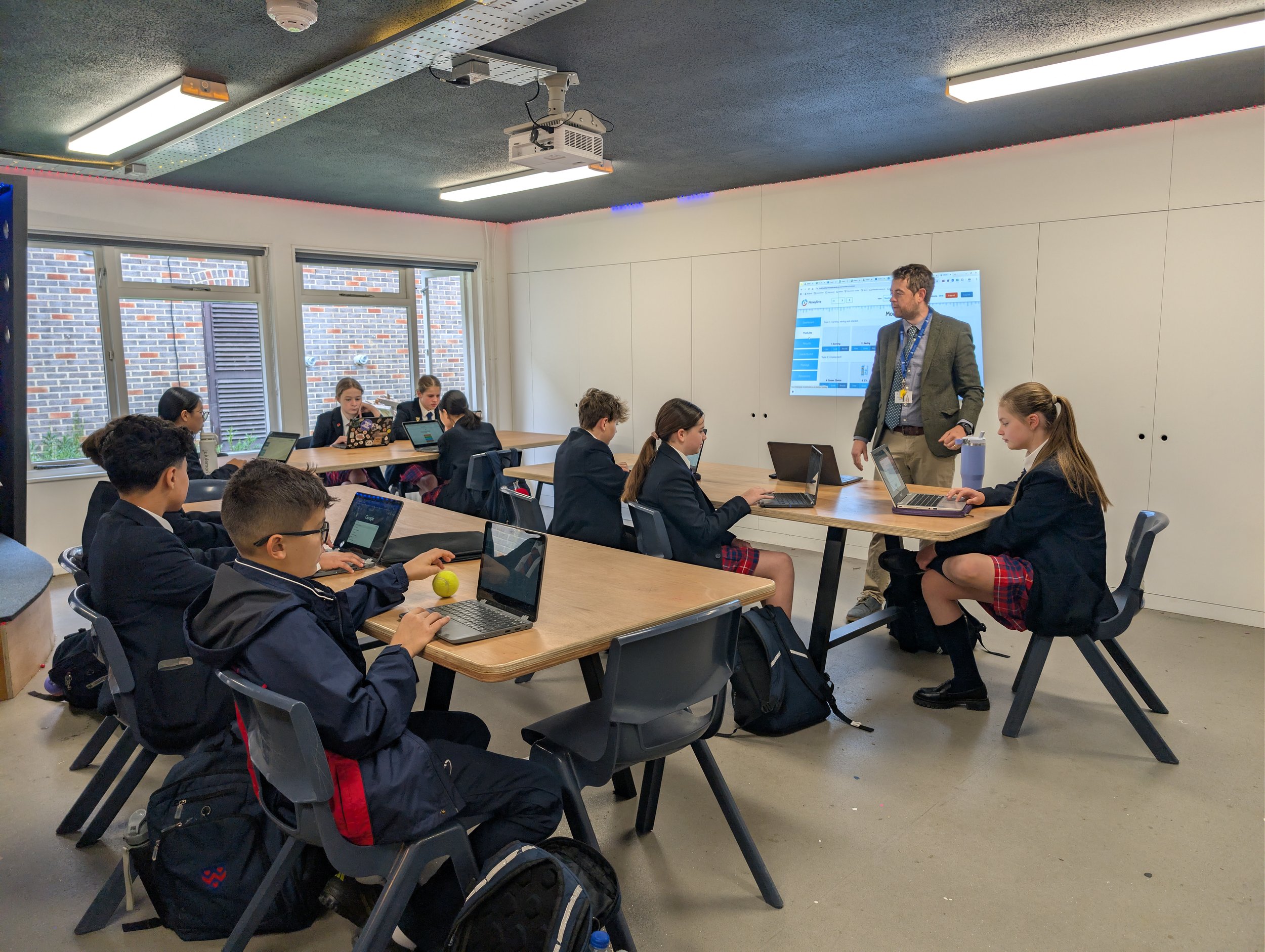
One of the strengths of MoneyTime, Christopher found, was its ability to support different learners at different speeds.
“I split them into groups,” he explains. “With a core group, I talked them through the modules because there’s a lot of new words and concepts.”
This also gave him valuable insight into how different learners engaged with the content. “Some students moved very quickly, while others needed more support with the language and ideas. For these groups, I slowed it down and explained things step-by-step.”
This flexibility meant no student was left behind, while more confident or motivated learners were free to progress faster. “That flexibility was a strength. It allowed me to work closely with one group while others progressed independently.”
Motivation That Lasts Beyond Week One
One of Christopher’s biggest concerns with new digital resources is the familiar pattern: excitement in the first lesson, then declining interest soon after.
MoneyTime broke that pattern.
“I really liked the way the children reacted to it each week, they were genuinely excited and looking forward to doing it,” he says. “They knew what they were coming into and it's not easy to create software like this where the children are continually motivated week after week.”
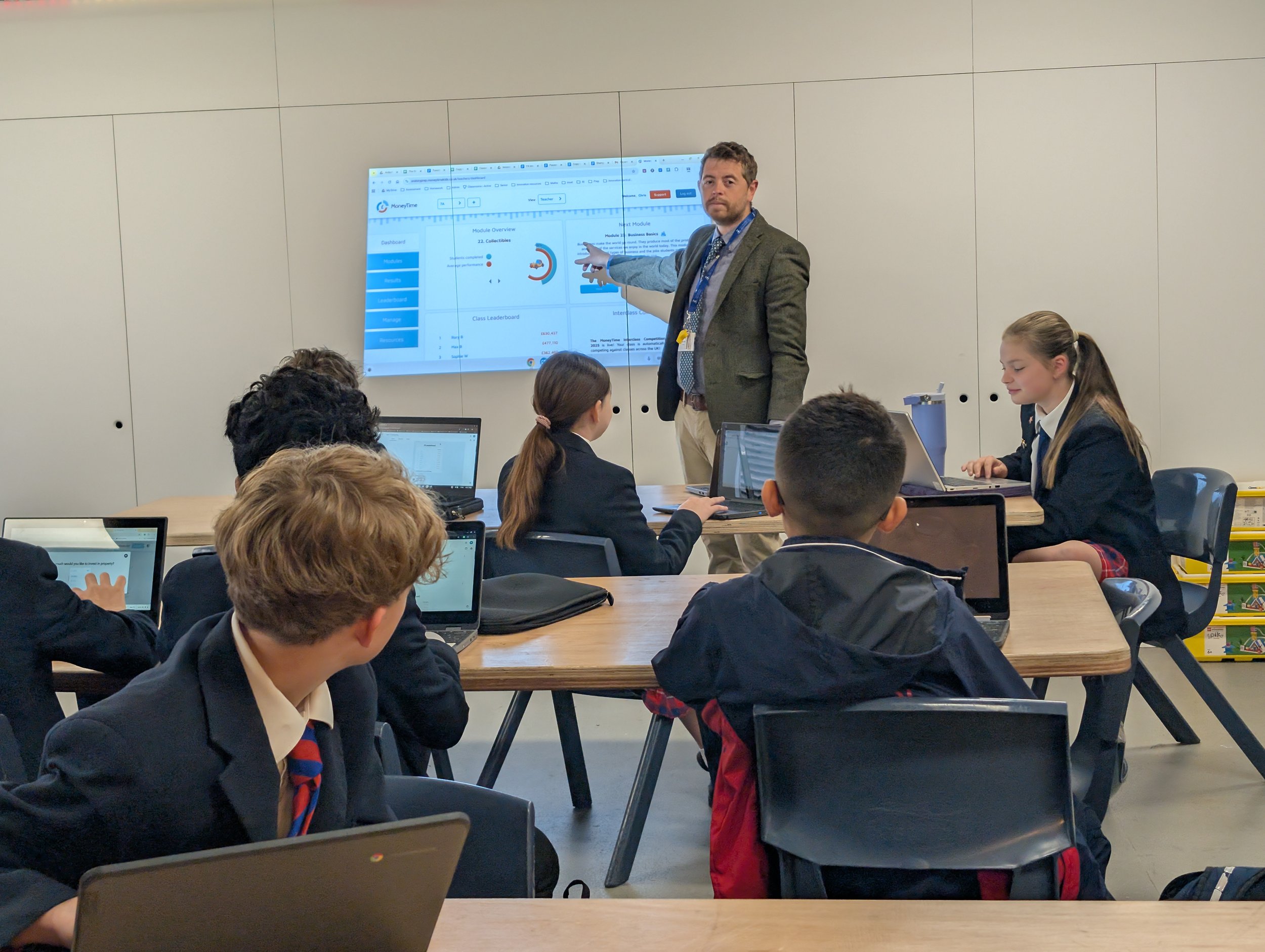
The combination of reading, quizzes, virtual money, investing and leaderboards kept students engaged. The built‑in gamification played a central role. Students knew that once they completed the reading and exercises, something exciting awaited them.
“Because there’s always a reward at the end, they knew that beyond the module reading and exercises, they were going to see the class leaderboard,” Christopher explains. “It created that competitive nature where they thought, ‘Right, I’ve got to study, I’ve got to find the answers, so that when it comes to it, I can earn more money and be able to invest more.’”
Rather than skipping content, students became more invested in understanding it properly, because knowledge directly influenced their performance in the game. “They knew that to do well in the game, they had to understand the content,” Christopher explains. “So they were invested in learning, not just clicking through.”
Real Conversations, Real‑World Impact
MoneyTime didn’t just stay on the screen, it became a catalyst for discussion.
“The conversations that come out of what they’re reading are incredibly valuable,” Christopher reflects. “That’s one of the best learning outcomes.”
The programme introduced students to financial language they encountered nowhere else, terms and concepts many adults wish they had learned earlier. “It gave children exposure to language they just don’t really hear at all,” he says. “And even through senior school potentially.”
Parents Noticing the Difference
That early exposure mattered, not just to teachers, but to parents.
Following the MoneyTime unit, Christopher heard consistent feedback during parent meetings.
“Parents were delighted,” he says. “They loved hearing that their children were learning about money at this age. The most common response was, ‘I wish I’d learned this when I was young.’”
That exposure to financial language and ideas, long before GCSEs or adulthood, gave parents confidence that their children were building essential life skills early.
Learning Through Risk and Resilience
Within the same class, MoneyTime supported both fast-moving and cautious learners. Some students eagerly took risks in the investment game, while others adopted a more measured approach, patterns Christopher recognised as valuable learning experiences in themselves.
Even when students experienced setbacks in the game, those moments became lessons in resilience and risk management.
“They might lose interest once they realise their investments haven’t gone well,” he notes. “But by that point, they’ve already covered a huge amount of content. And that lesson, that things don’t always go to plan, is an important one.”
A Tool Teachers Can Trust
From a practical standpoint, Christopher found MoneyTime intuitive and easy to use. Progress tracking was clear and the student data available to teachers supported meaningful intervention.
“The more I use it, the more value I see,” he says. “It’s well thought out and it works in a real classroom setting.”
The programme represents strong monetary value compared to other digital resources, a crucial factor for schools balancing impact and budget.
Looking Ahead
Having seen the impact with Year 7, Christopher has already extended MoneyTime across year groups, giving students exposure in both Year 7 and Year 8.
With its blend of structured content, flexibility and sustained engagement, MoneyTime has earned a place in Oratory Prep’s innovation curriculum and continues to shape how students think and talk about money.
“It keeps them motivated, sparks proper conversations and gives them exposure to language they simply don’t get elsewhere,” Christopher reflects. “For us, that makes it incredibly worthwhile.